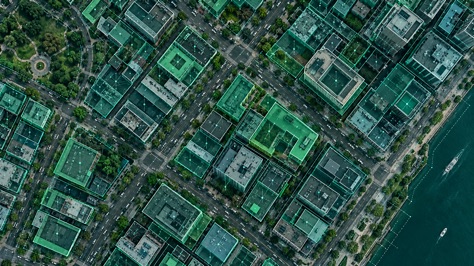
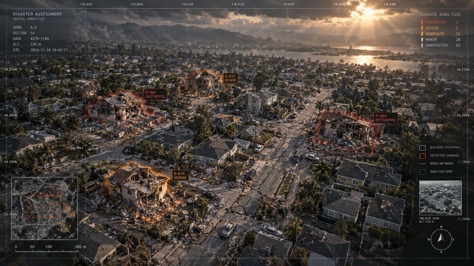
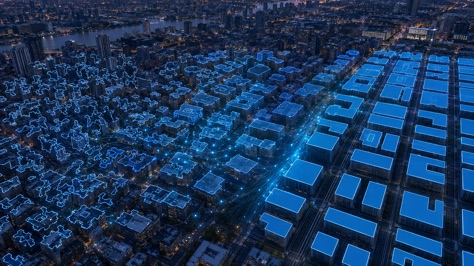
Orthophotos—geometrically corrected aerial photographs that function as maps—have been essential tools for geospatial professionals for decades. Traditionally, extracting meaningful information required skilled analysts and time-intensive manual processes. Today, AI is revolutionizing how we interpret orthophotos.
Understanding Orthophotos
What Makes an Orthophoto Different?
Unlike raw aerial photographs, orthophotos are:
- Geometrically corrected: Camera tilt and terrain displacement removed
- Uniformly scaled: Every pixel represents the same ground distance
- Map-accurate: Can be used for measurements like traditional maps
- Seamless: Multiple images merged into continuous coverage
Common Orthophoto Sources
| Source | Resolution | Coverage | Update Frequency |
|---|---|---|---|
| Satellite | 30cm-5m | Global | Monthly-Yearly |
| Manned Aircraft | 5-30cm | Regional | Annual |
| Drones (UAV) | 1-10cm | Local | On-demand |
AI-Powered Orthophoto Analysis
How AI Transforms Interpretation
Machine learning enables:
- Automated feature extraction: Buildings, roads, vegetation, water
- Semantic segmentation: Pixel-level classification
- Object detection: Identifying and locating specific objects
- Change detection: Automatically identifying differences over time
- Pattern recognition: Finding anomalies and trends
Types of AI Analysis
Semantic Segmentation
Classifies every pixel into categories like buildings, roads, vegetation.
Output: Thematic raster or vector data
Object Detection
Identifies and locates specific objects with bounding boxes.
Output: Bounding boxes with coordinates
Instance Segmentation
Combines detection with precise boundary delineation.
Output: Polygon features for each object
Change Detection
Identifies differences between orthophotos from different dates.
Output: Change maps with comparison
Industry Applications
Urban Planning and Development
Traditional Approach
- • Manual digitizing of footprints
- • Visual assessment of patterns
- • Time-consuming classification
AI-Powered Approach
- • Automated building extraction
- • Instant land use classification
- • Rapid change detection
Impact: Analysis time reduced from weeks to hours
Agriculture and Forestry
Traditional Approach
- • Field surveys for crop health
- • Manual tree counting
- • Visual pest assessment
AI-Powered Approach
- • Automated crop health mapping
- • AI tree detection & classification
- • Early pest detection
Impact: 90% reduction in field survey requirements
Construction and Engineering
Traditional Approach
- • Manual progress documentation
- • Surveyor measurements
- • Visual safety inspections
AI-Powered Approach
- • Automated progress tracking
- • Volume calculations from DSMs
- • AI-assisted safety monitoring
Impact: Real-time monitoring at 10% of traditional cost
Comparing Accuracy
Building Detection Benchmark
| Metric | Traditional | AI-Powered | Notes |
|---|---|---|---|
| Detection Rate | 94.2% | 96.8% | AI finds more small structures |
| Boundary Accuracy | 0.87 IoU | 0.91 IoU | AI more consistent |
| Processing Time | 40 hours | 15 minutes | AI 160x faster |
| Cost (1,000 buildings) | $2,000 | $150 | AI 13x cheaper |
Implementation Strategies
Getting Started with AI
Step 1: Define Your Use Case
What features do you need to extract? What accuracy is required? What's your budget?
Step 2: Assess Your Data
Orthophoto resolution, geographic coverage, temporal requirements.
Step 3: Choose Your Approach
Pre-trained services for common features, custom training for specialized needs.
Step 4: Validate Results
Compare AI output to ground truth, assess accuracy for your use case.
Conclusion
AI-powered orthophoto analysis represents a paradigm shift in how we extract information from aerial imagery. While traditional methods remain valuable for specific applications, AI offers compelling advantages for most use cases.
Organizations that embrace AI for orthophoto analysis gain significant competitive advantages: faster project delivery, lower costs, and the ability to work at scales previously impossible. The technology has matured from experimental to essential.
Ready to Implement?
- Choose your photogrammetry software — Compare Pix4D, Metashape, DJI Terra and more
- Understand AI segmentation technology — Complete guide to how it works
- Try WetuneAI for your project — Free, no registration required
Ready to Transform Your Orthophoto Workflow?
Try WetuneAI's building segmentation and experience the power of AI-powered analysis.
Try It for Free →Frequently Asked Questions
What resolution do I need for AI building detection?
Aim for 10-30 cm ground sample distance (GSD). Higher resolution (5-10 cm) improves accuracy for small structures.
Can AI work with satellite imagery?
Yes, AI works with both satellite and drone photos. Satellite (30cm+) suits large-scale analysis. Drone imagery (1-10cm) provides superior detail.
Will AI replace human analysts?
AI augments rather than replaces analysts. Humans focus on complex cases, quality control, and client relations while AI handles routine analysis at scale.
How do I validate AI results?
Compare AI output to ground truth data. Calculate accuracy metrics like precision, recall, and IoU for your specific use case.