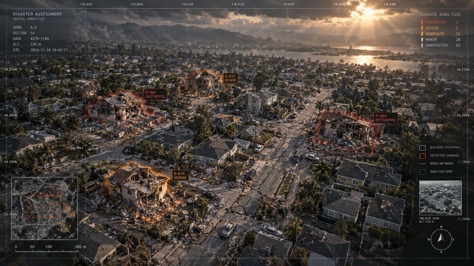
In 2024, seven countries achieved what once seemed impossible: generating nearly 100% of their electricity from renewable sources. This milestone isn't just about clean energy—it's about smart planning powered by advanced geospatial technologies, including AI building segmentation.
The Renewable Revolution: 7 Countries Leading the Way
According to recent data from The Independent, seven nations now generate nearly all their electricity from renewable sources:
- Iceland — Harnessing hydro and geothermal power
- Norway — Leveraging vast hydroelectric resources
- Bhutan — Mountain rivers powering the nation
- Nepal — Hydroelectric potential realized
- Costa Rica — Diverse mix of hydro, wind, and geothermal
- Albania — Hydro-powered sustainability
- Paraguay — Itaipu Dam and hydro dominance
What do these countries have in common beyond their renewable achievements? They all rely on sophisticated geospatial analysis for planning and maintaining their energy infrastructure—and AI building segmentation is becoming an essential tool in this process.
How AI Building Segmentation Powers Sustainable Planning
1. Solar Farm Site Selection
Solar energy projects require precise analysis of land use, building density, and infrastructure proximity. AI building segmentation can automatically identify:
- Optimal locations for solar panel installation
- Shadow patterns cast by existing buildings
- Available rooftop space for distributed solar
- Land use conflicts and zoning compliance
Traditional manual analysis of a 100-square-kilometer area might take weeks. With AI building segmentation, the same analysis completes in hours with 90-97% accuracy.
2. Wind Turbine Placement Optimization
Wind energy projects face similar challenges. Turbines must be placed to maximize wind capture while minimizing impact on communities. AI-powered building detection helps planners:
- Identify buffer zones around residential areas
- Map existing infrastructure for grid connection planning
- Assess visual impact on urban landscapes
- Monitor construction progress over time
3. Smart Grid Infrastructure Planning
As renewable energy sources proliferate, smart grid infrastructure becomes critical. AI building segmentation supports grid planning by:
- Mapping building density for load forecasting
- Identifying optimal transformer and substation locations
- Planning underground cable routes
- Monitoring urban growth patterns for future capacity needs
The Smart City Connection
The same technology powering renewable energy planning is fundamental to smart city development. Modern cities are using AI building segmentation for:
Urban Density and Growth Monitoring
Cities can track development patterns over time by comparing building footprints from different time periods. This enables:
- Evidence-based zoning decisions
- Identification of unauthorized construction
- Population density analysis for service planning
- Green space preservation monitoring
Energy Efficiency Assessment
Building footprints extracted through AI analysis help cities assess:
- Roof area available for solar installations
- Building-to-green-space ratios
- Heat island effects in dense urban areas
- Opportunities for green building retrofits
Disaster Resilience Planning
Sustainable cities must also be resilient cities. AI building segmentation aids in:
- Flood risk assessment based on building locations
- Earthquake vulnerability mapping
- Emergency response route planning
- Post-disaster damage assessment
Real-World Impact: Numbers That Matter
The efficiency gains from AI building segmentation are substantial:
Time Savings Comparison
Manual Method
80-120 hours
for 1,000 buildings
AI-Powered
2.5-4.5 hours
for 1,000 buildings
95% time reduction
For a typical urban planning department processing 5,000+ buildings annually, this translates to first-year savings exceeding $90,000—not counting the faster project completion and improved decision-making quality.
The Future: AI + Sustainability
As we look toward 2030 and beyond, the integration of AI building segmentation with sustainable planning will only deepen. Emerging applications include:
Carbon Footprint Mapping
By combining building footprints with energy consumption data and material databases, AI systems can estimate the carbon footprint of entire neighborhoods—enabling targeted retrofit programs.
Urban Heat Island Mitigation
Detailed building and vegetation mapping helps cities design cooling strategies, from green roof incentives to strategic tree planting programs.
Circular Economy Planning
Understanding the built environment at scale enables better planning for material reuse, deconstruction, and construction waste reduction.
Getting Started with AI Building Segmentation
For urban planners, GIS professionals, and sustainability consultants looking to leverage AI building segmentation, the barrier to entry has never been lower. Modern tools like WetuneAI offer:
- No training required — Pre-trained models ready for immediate use
- Flexible input — Process drone imagery, orthophotos, or satellite data
- Multiple outputs — GeoJSON, Shapefile, DXF for integration with existing GIS workflows
- Scalable processing — From single buildings to city-wide analysis
Ready to Transform Your Planning Workflow?
Experience how AI building segmentation can accelerate your sustainable urban planning projects. Try WetuneAI for free—no registration required.
Try It Free →Conclusion
The seven countries achieving 100% renewable electricity demonstrate what's possible when vision meets technology. As the world races toward net-zero targets, tools like AI building segmentation will be essential for planning the sustainable cities of tomorrow.
From solar farm site selection to smart grid planning, from urban density monitoring to disaster resilience—the applications are as diverse as the sustainability challenges we face. The question isn't whether AI will transform urban planning, but how quickly organizations can adopt these powerful tools.
The future is renewable. The future is smart. And with AI building segmentation, that future is closer than ever.
Frequently Asked Questions
How does AI building segmentation support renewable energy projects?
AI building segmentation supports renewable energy projects by automatically identifying buildings, structures, and land use patterns from drone imagery and satellite data. This enables precise site selection for solar farms and wind turbines, shadow analysis for solar panel placement, infrastructure planning, and environmental impact assessment. The technology reduces planning time from weeks to hours while improving accuracy.
Which 7 countries generate nearly 100% of their electricity from renewables?
According to recent data, the seven countries generating nearly all their electricity from renewable sources are: Iceland (hydro and geothermal), Norway (hydro), Bhutan (hydro), Nepal (hydro), Costa Rica (hydro, wind, geothermal), Albania (hydro), and Paraguay (hydro). These countries demonstrate how geographic advantages combined with smart planning can achieve energy sustainability.
What role does geospatial AI play in smart city development?
Geospatial AI plays a crucial role in smart city development by providing accurate, up-to-date information about urban infrastructure. It enables automated building footprint extraction, land use classification, change detection over time, solar potential assessment, green space analysis, and urban density monitoring. This data helps city planners make evidence-based decisions for sustainable development.
How accurate is AI building segmentation for urban planning?
Modern AI building segmentation achieves 90-97% accuracy with high-quality drone imagery (2-5 cm/pixel ground resolution). For urban planning applications, this level of accuracy is sufficient for most use cases including density calculations, solar potential assessment, and infrastructure planning. Results should be validated against ground truth data for critical regulatory applications.
Can AI building segmentation help with solar panel installation planning?
Yes, AI building segmentation is highly effective for solar panel installation planning. It can automatically identify roof areas, calculate available surface area, assess roof orientation and tilt, identify shading obstacles from nearby structures, and estimate solar potential. This reduces site assessment time by 85-95% compared to manual methods while providing more comprehensive data.
What types of imagery work best for sustainable planning applications?
For sustainable planning applications, high-resolution drone imagery (2-5 cm/pixel) provides the best results for detailed site analysis. Satellite imagery (30-50 cm/pixel) works well for regional planning and change detection over time. Orthophotos—geometrically corrected aerial images—are ideal for measurement applications. Thermal imagery can additionally help identify energy efficiency opportunities.
How does AI building segmentation compare to traditional urban planning methods?
AI building segmentation reduces analysis time by 85-95% compared to traditional manual methods. While manual digitizing might take 80-120 hours for a 1,000-building project, AI processing completes in 2.5-4.5 hours. AI also provides greater consistency across large datasets and can identify patterns humans might miss. However, AI results should still be validated by professionals for critical decisions.
What is the ROI of using AI for sustainable urban planning?
Organizations typically see positive ROI immediately when adopting AI for urban planning. For a department processing 5,000+ buildings annually, first-year savings can exceed $90,000 through reduced labor costs and faster project completion. The break-even point is often reached within the first project, with time savings of 85-95% compared to manual methods.
Related Articles
How AI Building Segmentation is Revolutionizing Urban Planning
Discover how artificial intelligence is transforming the way professionals extract building footprints from drone imagery.
Business AnalysisAI vs Manual Building Detection: Cost Comparison
Is AI worth the investment? We break down the real costs of manual vs automated building detection with ROI analysis.