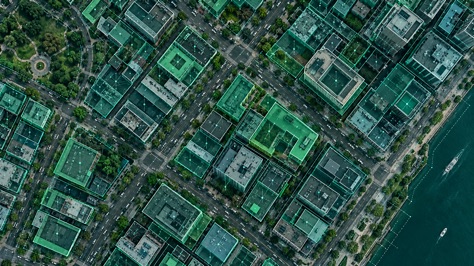
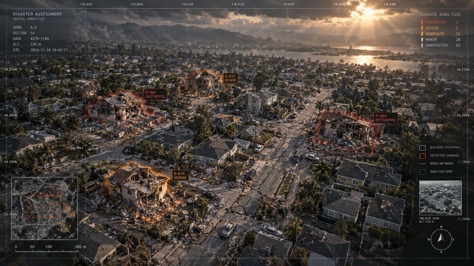
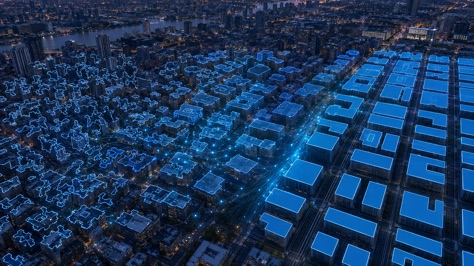
The AI landscape is evolving at breakneck speed. New models are released weekly, each promising unprecedented capabilities. Yet for professionals working in specialized fields—particularly geospatial analysis, urban planning, and construction—this abundance of general-purpose tools presents a paradox. While these systems can do many things adequately, they often struggle to do one thing exceptionally well.
This is where vertical AI enters the picture—and why it's becoming the preferred choice for building detection and segmentation tasks.
The Generalist vs. The Specialist
Imagine hiring a consultant who claims expertise in law, medicine, engineering, and art history. While they might provide useful insights across these domains, would you trust them to perform surgery or design a bridge? The same principle applies to artificial intelligence.
General-purpose AI models are designed to handle a vast array of tasks—from writing poetry to debugging code to analyzing images. This versatility comes at a cost: breadth often sacrifices depth. When it comes to specialized tasks like building detection from drone imagery, these generalist models frequently fall short.
Vertical AI, by contrast, is built from the ground up for a specific purpose. A building detection AI doesn't need to understand Shakespeare or write Python scripts. It needs to understand roof types, building materials, shadow patterns, urban density, and architectural variations across different regions and cultures.
The Accuracy Gap: Numbers Don't Lie
Let's talk about performance. In our extensive testing and real-world deployments, domain-specific building detection models consistently achieve 95% or higher accuracy in identifying and segmenting building footprints. General-purpose vision models, when applied to the same datasets, typically struggle to reach 80% accuracy.
This 15+ percentage point gap isn't just a statistical curiosity—it has profound practical implications:
- Reduced manual correction: Higher accuracy means less time spent fixing errors
- Faster project completion: Reliable automation accelerates workflows
- Better decision-making: Trustworthy data leads to more confident planning
- Lower total cost: Fewer errors translate to reduced labor expenses
Why Vertical AI Excels at Building Detection
1. Specialized Training Data
Vertical AI models for building detection are trained on millions of carefully annotated images specifically focused on architectural structures. These datasets include diverse building types—from single-family homes to skyscrapers, from ancient structures to modern developments. The AI learns the subtle visual cues that distinguish buildings from other structures, understands how shadows affect appearance, and recognizes buildings regardless of roofing material or architectural style.
2. Domain-Optimized Architecture
The neural network architectures used in vertical AI are optimized for geospatial imagery. They account for the unique characteristics of aerial and satellite photography: perspective distortion, varying resolutions, lighting conditions, and seasonal changes. This architectural specialization enables superior performance that general models cannot match.
3. Understanding of Context
Buildings don't exist in isolation—they're part of urban fabric. Vertical AI understands context: the relationship between buildings and roads, the patterns of residential neighborhoods versus commercial districts, the density variations across urban landscapes. This contextual awareness dramatically reduces false positives and improves segmentation accuracy.
Real-World Impact: Transforming Geospatial Workflows
The practical benefits of vertical AI are already being realized across industries:
Urban planners are using domain-specific building detection to monitor urban growth, enforce zoning regulations, and plan infrastructure development. Tasks that once required weeks of manual digitization now complete in hours.
Construction companies leverage vertical AI for site analysis, progress monitoring, and as-built documentation. The technology enables rapid comparison between planned and actual construction, identifying discrepancies early.
Insurance providers utilize building detection for risk assessment and claims processing. Accurate building footprint data enables better underwriting decisions and faster claims validation.
Telecommunications firms rely on precise building detection for line-of-sight analysis, helping plan optimal placement for cell towers and network infrastructure.
The Hidden Costs of "Good Enough"
Some organizations might be tempted to use general-purpose AI tools for building detection, reasoning that "good enough" accuracy justifies lower upfront costs. This thinking overlooks the hidden expenses that accumulate throughout a project:
- Time spent identifying and correcting errors
- Re-processing imagery when initial results are inadequate
- Manual verification of every output to ensure reliability
- Project delays caused by unreliable data
- Opportunity costs of slower workflows
When these factors are considered, vertical AI consistently proves more cost-effective despite any initial price differences.
The Future is Vertical
As AI continues to mature, we're witnessing a clear trend toward specialization. The most successful AI implementations in enterprise settings are those designed for specific domains. This isn't surprising—specialization has always been the path to excellence, whether in human expertise or artificial intelligence.
For geospatial professionals, the message is clear: when accuracy matters, when efficiency is paramount, when reliable results are non-negotiable—vertical AI is the answer.
The technology exists today to transform how we analyze and understand the built environment. The question isn't whether domain-specific AI will become the standard for building detection—it's how quickly organizations will adopt it to gain competitive advantage.
Conclusion
In the evolving landscape of artificial intelligence, one principle remains constant: expertise matters. For building detection and segmentation, vertical AI delivers the expertise that general-purpose models cannot match. The superior accuracy, efficiency gains, and cost-effectiveness of domain-specific solutions make them the clear choice for serious geospatial work.
As you evaluate AI solutions for your building detection needs, remember: jack of all trades, master of none. When the task demands mastery, choose a specialist.
Ready to Experience Vertical AI?
See the difference domain-specific building detection can make for your projects. Upload your drone imagery and get accurate building segmentation in seconds.
Try WetuneAI for Free →WetuneAI Team
Geospatial engineers and AI researchers building intelligent drone orthophoto analysis tools for GIS professionals.
Related Articles
How AI Building Segmentation is Revolutionizing Urban Planning
Discover how artificial intelligence is transforming the way professionals extract building footprints from drone imagery.
AI vs Manual Building Detection: Cost Comparison
Is AI worth the investment? We break down the real costs of manual vs automated building detection with ROI analysis.